07
SeptemberWhat Is A Landscape Character Assessment? A Complete Guide
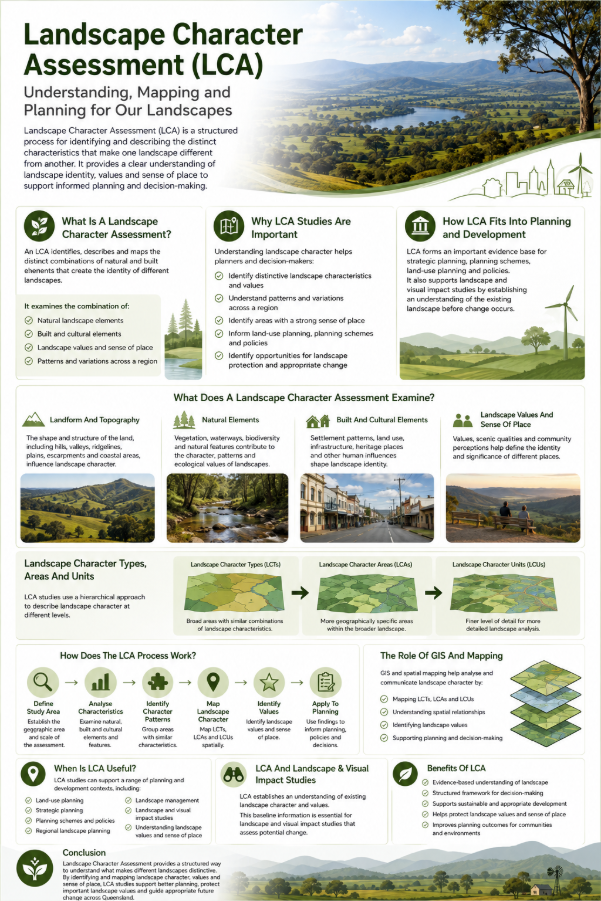
A Landscape Character Assessment (LCA) is a structured process for identifying and describing the different characteristics that make one landscape distinct from another. Rather than judging a landscape as better or worse, an LCA examines the combination of natural and built elements that creates its identity and sense of place.
Landscape Character Assessment can provide an important evidence base for land-use planning, strategic planning, planning schemes and policies. It can also contribute to landscape and visual impact studies by establishing an understanding of the existing landscape before change occurs.
What Is a Landscape Character Assessment?
Landscape Character is a distinct, recognisable and consistent pattern of elements in the landscape that makes one landscape different from another. A Landscape Character Assessment identifies and explains the variation in landscape character across a defined study area. It considers the unique combination of landscape elements and features that contribute to the identity of different places. The assessment can be undertaken at both regional and local scales, depending on the purpose and requirements of the project.
Why Is Landscape Character Important?
Understanding landscape character helps explain why different parts of a region or locality have their own distinctive identity.
An assessment can help identify:
- Distinctive landscape characteristics
- Landscape values
- Patterns and variations across a region
- Areas with a strong sense of place
- Relationships between different landscape elements
- Character that should be considered in future planning
- Opportunities to inform land-use planning and policy
By identifying these characteristics, planners and decision-makers can develop a clearer understanding of how landscape identity can be considered when managing future change.
What Does a Landscape Character Assessment Examine?
The exact assessment methodology depends on the project and study area. However, an LCA generally considers the combination of elements and features that contribute to landscape character.
Natural Landscape Elements
Natural features can play an important role in defining the character of an area. These may include landform, vegetation, waterways, topography and other physical landscape characteristics. The relationship between these elements can create recognisable landscape patterns that distinguish one area from another.
Built And Cultural Elements
Landscape character is not defined only by natural features. Settlement patterns, development, infrastructure, land use and other human influences can also contribute to the identity of a landscape. Understanding how these elements interact with the natural landscape helps establish a more complete picture of local character.
Landscape Values and Sense of Place
A key part of landscape character work is understanding the values and characteristics that contribute to a location’s identity. The assessment can help capture a sense of place at both regional and local scales, providing a framework for understanding what makes particular landscapes distinctive.
What Are Landscape Character Types, Areas and Units?
Landscape Character Assessment can use a hierarchical approach to describe landscape character at different levels, with TRACE Visual Planning + Design applying this approach across different landscape studies.
Landscape Character Types
Landscape Character Types (LCTs) identify broad areas that share similar combinations of landscape characteristics.
Landscape Character Areas
Landscape Character Areas (LCAs) provide a more geographically specific understanding of landscape character within the broader landscape structure.
Landscape Character Units
Landscape Character Units (LCUs) can provide a finer level of detail where more detailed landscape analysis is required.
Together, LCTs, LCAs and LCUs provide a structured way to identify landscape values and characteristics across different spatial scales.
How Does the Assessment Process Work?
The methodology can vary according to the project, but a Landscape Character Assessment generally involves a combination of landscape analysis, spatial assessment and mapping.
Define The Study Area
The first stage is to establish the geographic area and scale of the assessment. This may involve a regional area, local government area or a more specific planning area.
Analyse Landscape Characteristics
Relevant landscape elements and features are examined to understand how they combine and vary across the study area.
Identify Character Patterns
Areas with similar landscape characteristics can then be grouped into appropriate Landscape Character Types, Areas and Units.
Map Landscape Character
Mapping provides a spatial representation of the identified character areas and helps communicate landscape patterns and values clearly.
Identify Landscape Values
The assessment can then identify the values and characteristics that contribute to landscape identity and sense of place.
Apply The Findings to Planning
The resulting information can provide an evidence base for strategic planning, planning schemes and policies, land-use planning and related landscape studies.
What Does a Landscape Character Assessment Report Include?
A Landscape Character Assessment report brings together the findings of the landscape study in a clear and structured format. The content can vary depending on the project’s purpose and scale, but a report will generally explain the existing landscape character, key characteristics, landscape values and patterns across the study area.
It may include:
- Study area and landscape context: The geographic area covered by the assessment and its broader landscape setting.
- Landscape characteristics: Key natural, built and cultural features that contribute to the identity of the landscape.
- Landscape Character Types and Areas: Identification of areas with similar landscape characteristics and their spatial relationships.
- Landscape values: Information about the qualities and characteristics that contribute to landscape identity and sense of place.
- Mapping and spatial information: Maps showing landscape character, values, patterns and relationships across the study area.
- Landscape analysis: An explanation of how different landscape elements combine and vary across the area.
- Planning considerations: Findings that can provide an evidence base for land-use planning, planning schemes, policies and future landscape-related decisions.
The level of detail will depend on the objectives, geographic scale and planning requirements of the assessment.
How Can GIS Support Landscape Character Assessment?
GIS and spatial mapping can play an important role in Landscape Character Assessment by allowing different landscape characteristics to be analysed and represented spatially.
Mapping can help demonstrate:
- Landscape Character Types
- Landscape Character Areas
- Landscape Character Units
- Landscape values
- Spatial relationships
- Regional and local landscape patterns
This makes the assessment easier to communicate and provides practical information that can be incorporated into planning processes.
When Is a Landscape Character Assessment Useful?
Landscape Character Assessment can be particularly useful where a planning project needs to understand the existing identity and variation of a landscape.
It can contribute to:
- Land-use planning
- Local government strategic planning
- Planning schemes
- Planning policies
- Regional landscape planning
- Landscape management
- Landscape and visual impact studies
- Understanding landscape values and sense of place
The appropriate scope and level of detail will depend on the planning objectives and the scale of the study.
How Is LCA Related to Landscape and Visual Impact Studies?
Landscape Character Assessment (LCA) and Landscape and Visual Impact Assessment (LVIA) are closely related, but they serve different purposes. An LCA examines the features and qualities that make a landscape distinctive, helping to establish a clear understanding of its existing character, variation, values and landscape character areas. This baseline information can then support landscape and visual impact studies by providing context for assessing potential changes and their relationship with the surrounding landscape. It can also help inform landscape planning and future development decisions.
What Are the Benefits of Landscape Character Assessment?
A well-structured LCA can provide a consistent framework for understanding landscape character across a study area.
Key benefits include:
- Identifying distinctive landscape characteristics
- Mapping landscape character at different scales
- Understanding landscape values
- Capturing regional and local sense of place
- Supporting strategic land-use planning
- Informing planning schemes and policies
- Providing useful baseline information for landscape and visual impact studies
The main value of an LCA is that it turns landscape characteristics and values into a structured evidence base that can support planning and decision-making.
Why Use a Specialist Landscape Character Assessment Consultant?
Landscape Character Assessment requires an understanding of landscape characteristics, spatial relationships, mapping and planning context. A specialist consultant can help develop an assessment methodology suited to the study area and planning objectives. The work can involve landscape analysis, character classification, mapping and interpretation of landscape values. For larger regional or local studies, a hierarchical approach using Landscape Character Types, Areas and Units can help communicate landscape character consistently across different scales.
Conclusion: Understanding Landscape Character Before Future Change
Landscape Character Assessment provides a structured way to understand distinctive landscapes. By mapping Landscape Character Types, Areas and Units, it captures landscape values and sense of place while supporting land-use planning, policies and landscape and visual impact studies. For projects requiring LCA, mapping and spatial analysis, a tailored approach helps address specific planning requirements. Need a Landscape Character Assessment for your project? Contact us today to discuss your landscape assessment requirements and find out how our specialist landscape planning and spatial analysis services can support your project.